Features, pros and limitations
Free vs paid event apps, which Is right for your event?
Event apps are now a standard part of modern events. Whether you’re running a networking meetup, conference or exhibition, attendees expect a mobile experience that keeps everything in one place.
When researching options, most organisers begin by looking for a free event app, especially if they want to launch quickly without committing to long contracts or enterprise pricing.
Understanding the differences between a free event app and a paid event app platform can help you choose the right solution for your event goals, audience size and commercial model.https://allintheloop.com/launch-a-free-event-app/
Understanding what “free” really means
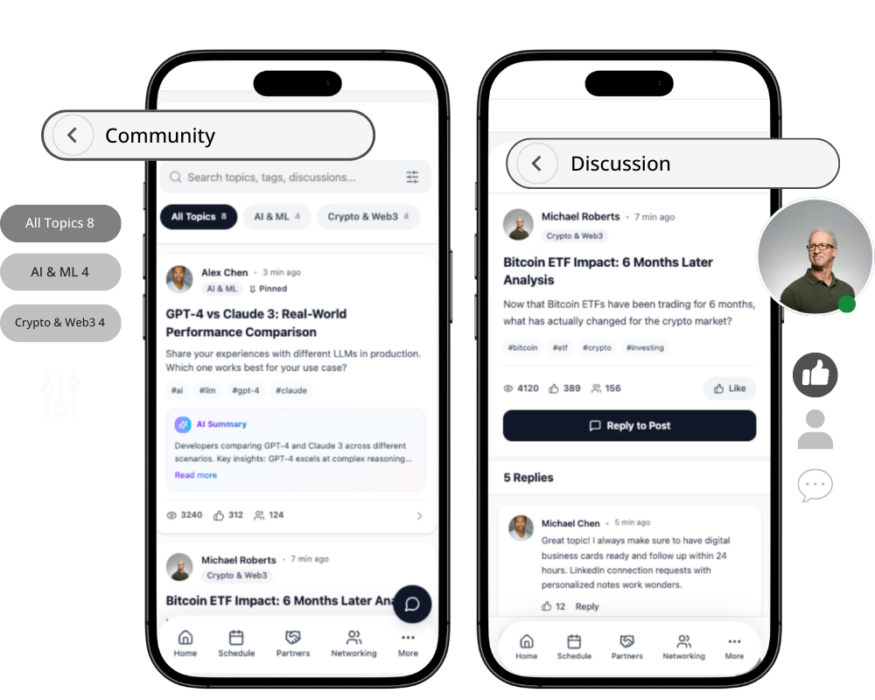
A free event app allows organisers to launch without upfront software costs or complex onboarding. For many small to mid-sized events, a free event app provides the core functionality attendees actually use, including agenda listings, speaker profiles, push notifications and basic networking tools.
In many cases, a free event app is ideal when speed and simplicity are priorities. If you are testing a new event concept or managing an event with limited internal resource, removing procurement friction can be a major advantage.
According to industry discussions from organisations like PCMA, event professionals are increasingly prioritising agility and flexibility over feature overload. This shift has made the free event app model more attractive than ever.
However, while a free event app delivers essential tools, it may not include advanced integrations, deep reporting or extensive customisation.
Free vs Paid Event Apps at a Glance
Where paid event apps make sense
Paid event apps typically introduce additional functionality designed for larger or more commercially complex events. Enterprise platforms such as AITL, Cvent, Bizzabo and Whova offer extended capabilities that support sponsorship activation, CRM integrations and detailed analytics.
For conferences and exhibitions where sponsorship revenue is central, paid event apps may provide greater flexibility in branding and monetisation. These platforms often include advanced lead capture tools, exhibitor dashboards and reporting features that allow organisers to demonstrate measurable ROI.
In these scenarios, the decision between a free event app and a paid event app becomes less about cost and more about scale and commercial expectations.
The decision is about maturity, not price
It is a common misconception that a free event app is only suitable for small events and that paid event apps are automatically more professional. In reality, the right solution depends on the maturity of your event and the level of operational complexity required.
A well-designed free event app can deliver a seamless attendee experience for many event formats. If your primary objective is to provide clear communication and intuitive navigation, a free event app may meet your needs perfectly.
As your event grows in audience size, sponsor packages and data requirements, upgrading from a free event app to a paid model can provide additional commercial tools. Many platforms now offer scalable pricing structures that allow organisers to begin with a free event app and expand functionality as their event evolves.
How to make the right choice
Before choosing between a free event app and a paid event app, consider how your attendees will actually use the platform. Will they primarily check the agenda and receive updates, or will they require advanced networking and exhibitor interaction tools?
Think carefully about sponsor expectations. If monetisation and lead tracking are central to your event strategy, a paid event app may provide stronger support. If your focus is clarity, speed and ease of use, a free event app may be the smarter starting point.
The most effective decision is one that aligns with your current needs while leaving space to scale.
Final thoughts
Free event apps and paid event apps both play important roles in the event technology ecosystem. The best choice depends on event size, commercial structure and operational requirements.
For many organisers, starting with a free event app offers a low-risk way to launch quickly and maintain control. As expectations increase, additional features can be introduced without rebuilding your technology stack.
If you are comparing your options, focus first on functionality and flexibility. The right event app should support your event strategy rather than complicate it.
Frequently asked questions
Is a free event app good enough for conferences?
For smaller conferences and community events, a free event app can cover the essentials attendees actually use, like schedules, updates and networking. Larger, sponsor-led conferences may benefit from paid platforms with deeper commercial tools and reporting.
What are the limitations of free event apps?
Free event apps typically prioritise speed and simplicity, so you may see fewer branding options, limited integrations and more basic analytics compared to paid enterprise platforms.
When should you upgrade to a paid event app?
If sponsorship revenue, detailed reporting, CRM integrations, SSO, or complex multi-day programmes are central to your event strategy, a paid solution can be a better fit.
Can you monetise a free event app?
Some modern platforms include sponsor visibility and content placement options in free plans, allowing you to monetise early and scale commercial features as your event grows.
Weighing up free vs paid event apps?
With AITL Connect, you can launch a professional event app in minutes, start free for smaller events and scale when your event grows, without switching systems or adding unnecessary complexity.
See how AITL Connect works and decide what’s right for your event.

TransWorld events

Association of Energy Engineers
National Association of Realtors

Stowe Family Law